

For universities, choosing the right English language test is one of the most important admissions decisions. The tests you accept affect who enters your programmes, how well they perform, and ultimately how your university is perceived. With so many providers making bold claims, it can be difficult to separate evidence from marketing – and accepting tests without sufficient investigation can lead to underprepared students, increased teaching burdens, and reputational risk.
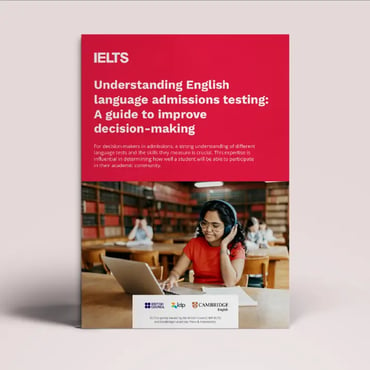
To address these challenges, IELTS has developed a guide to support your understanding of language assessment. This free resource helps university decision-makers know what to look for so they can evaluate tests with confidence, avoid common pitfalls, and set fair, evidence-based requirements that support student success.
Why test choice matters for admissions and academic outcomes
Assessing the right skills
Every English language test for international students promises to measure proficiency, but not all tests assess the skills needed for real academic tasks. Some focus too narrowly on grammar and vocabulary, whereas others evaluate general English competency rather than the ability to apply language skills effectively in academic settings, such as seminars and research, giving a weaker indication of the student’s readiness.
Understanding and setting scores for success
When universities don’t fully understand the test content or what test scores mean, the consequences ripple across the institution. As a consequence, students may struggle to meet academic demands, leading to lower levels of engagement and increased pressure on teaching and support staff. Inconsistent or overly broad minimum requirements can also create perceptions of unfairness.
Using research and evidence to inform admissions decisions
Making admissions decisions based on strong evidence rather than surface-level claims is essential for improving student outcomes, maintaining academic standards and safeguarding operational efficiency.
Red flags and pitfalls in language test use
There are several pitfalls within admissions decisions that can impact decision-making. These challenges may not be immediately evident, but over time they can have a significant impact.
Be mindful of these red flags and pitfalls in the testing process:
- Dependence on marketing materials
Impressive claims mean nothing unless they’re backed up by a range of sound, independent research.
Institutions need proper academic evidence to have confidence in the requirements they’ve set. That evidence must come from rigorously designed tests with credible results; otherwise, tests can’t offer a reliable indication of each student’s performance.
- Adding too many tests
Accepting multiple tests can create comparability challenges.
Staff may struggle with interpreting different score scales, mapping them against course requirements and finding the time required to set effective scores for a number of different tests.
- Assuming one test score ensures academic preparedness
The idea that meeting a single minimum cut-off score indicates academic success ignores the complexity of university study. One score is unlikely to show which skills a student excels in or where they may need support.
Understanding what a certain cut-off score means in relation to the context where it will be used gives a clear indication of whether the student has the abilities needed to progress in the course. Where possible, it’s useful to see scores broken down by individual skills. For example, a student with strong grammar and weak speaking may meet the threshold but still struggle in seminars, group work and oral assessments.
- Not accounting for post-entry student support
Students may have uneven scores across their English skills tests, and even those who are admitted could still struggle in some areas. Institutions that don’t prepare accordingly and provide the necessary support may face higher dropout rates and additional teaching burdens.
A deep understanding of what test scores mean enables universities to provide tailored English language support, focusing on the specific areas each student needs to improve. Proactive measures – such as courses, workshops, and targeted language support – help students develop the skills they need most, benefiting both the individual and the wider cohort. However, any support offered should align with the resources available at your institution, ensuring that interventions are both realistic and sustainable.
Many of these challenges can be avoided by ensuring you accept a reliable and well-validated test before you admit students.
Building Language Assessment Literacy
So how can universities strengthen decision-making and avoid these risks? The answer lies in developing Language Assessment Literacy – the knowledge and skills needed to understand what different tests measure, how to interpret results, and how to set policies that are both fair and defensible.
The IELTS Language Assessment Literacy Guide helps universities:
- ask the five key questions every institution should pose to test providers;
- apply evidence-based principles when reviewing tests and score-setting;
- identify red flags and pitfalls before they affect admissions;
- take practical next steps in aligning requirements with student support.
By building a better understanding of language assessment, your university will gain clarity on what test scores really mean, confidence in setting English language requirements, and greater assurance that students admitted under these policies will thrive in their courses.
Strengthen your admissions decisions
Choosing the right English language tests for university admissions is too important to leave to assumptions or marketing promises. Institutions that build Language Assessment Literacy ensure that entry standards reflect real academic demands, support student success, and protect their global reputation.
The IELTS Language Assessment Literacy Guide provides universities with the practical tools they need to make confident, evidence-based decisions.
Download the free guide to strengthen your admissions decisions and support better academic outcomes for your students and institution.